The plastic recycling industry in Turkey grows every year — new facilities open, existing ones increase capacity. But the question that comes with growth is always the same: "How can we increase our efficiency?" If the right equipment isn't chosen, raw material waste, high energy bills and machine downtime can erode profit margins. In this article, we share the efficiency problems we see most often in the field and what can be done about them.
5 Common Causes of Efficiency Loss
When we examine recycling facilities, we see that efficiency problems usually stem from the same five points:
- Insufficient pre-sorting: Mixed processing of different plastic types such as PET, HDPE, PP and PVC lowers the quality and sale price of the final granule.
- Old, energy-hungry crushers: Older-generation crushers can consume 2-3 times more energy per ton than modern motors — this difference shows up immediately on the energy bill.
- High machine downtime: Blade and bearing wear in poorly maintained equipment causes frequent breakdowns; every stoppage means a direct production loss.
- Incorrectly sized washing line: If crusher capacity exceeds the washing line, wet plastic pieces enter the granulator without being dried, lowering both granule quality and extruder efficiency.
- Belt speed mismatch: If the conveyor belts on the line run at different speeds, material piles up and stoppages occur.
What to Look for When Choosing a Plastic Crusher?
The crusher is the first piece of equipment that largely determines the efficiency of the line. Focus on these three points when choosing one:
- Material hardness: While standard blades are sufficient for soft plastics like HDPE and PP, harder materials like PC and PET may require reinforced blade steel.
- Output screen size: Screen opening should be chosen according to the desired size after granulation — too fine a screen both lowers capacity and accelerates blade wear.
- Cooling system: Friction heat can cause chloride gas release, especially with PVC; a cooled crusher eliminates this risk.
What Determines Granule Price and Quality?
The sale price of recycled granule depends directly on its quality, and quality largely depends on the three factors above (sorting, crusher choice, wash-dry balance). A well-sorted, correctly sized and well-dried granule commands a higher price from buyers and can be used in a wider range of applications (e.g., more critical injection applications). So efficiency work doesn't just lower costs — it also increases the value of what you produce.
Why Is Cap Assembly Automation Important?
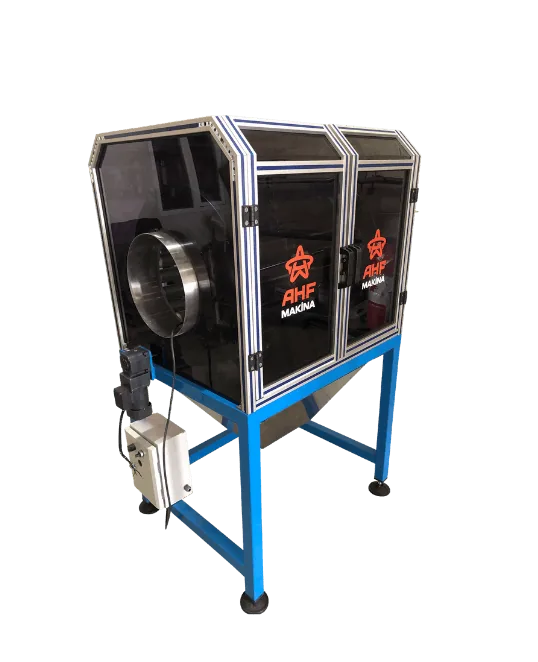
Cap assembly is often the overlooked final step on recycling lines. But bottles sold without caps both lower the price and weaken quality perception with buyers. AHF Makine's PKM series automatic cap assembly machines make this step fast and error-free, raising the product's sale value.
With a capacity of 60-200 bottles per minute, it provides accurate feeding to the filling machine at the end of the line and eliminates simple but costly mistakes like "forgotten cap" on bottles headed for shipment.
Conclusion: Efficiency Isn't the Job of a Single Machine
Efficiency in plastic recycling is the result of the crusher, washing, drying, extrusion and packaging lines working together. As AHF Makine, we don't just sell machines to our customers; we examine your production process on-site and recommend the most suitable configuration for you.
Related Product: Plastic Cap Assembly Machines →