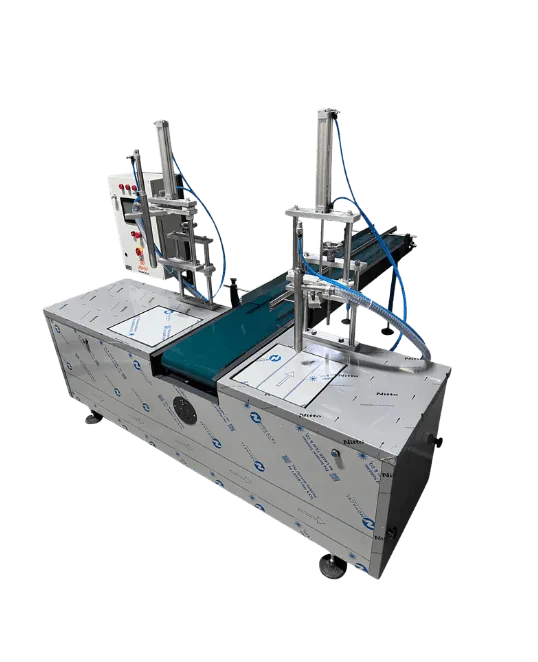
When buying a liquid filling machine, most businesses look at price first, then speed — but the right choice starts with your product's viscosity and precision requirements. Choosing the wrong model can lead to product loss from fill variance or a line speed that can't meet demand. In this guide, we list the criteria to consider when choosing a liquid filling machine.
Volumetric or Multi-Station?
For low-to-medium volume, single-nozzle production, volumetric filling machines are sufficient and offer a more economical solution. For high-volume, multi-SKU production lines, multi-station models (e.g. 20-station) multiply line speed by filling far more bottles in the same time.
Viscosity: The Most Critical Factor
Water-based, low-viscosity liquids and high-viscosity products like honey, shampoo and sauce require different pump and nozzle designs. On a machine chosen for the wrong viscosity class, fill precision drops, and foaming or dripping problems appear.
Filling Precision
In industries like food and cosmetics, precision below ±1% is expected; this is critical for both legal label compliance and preventing product loss. Precision varies depending on the filling principle used (time-based, volume-based, weight-based) — weight-based systems should be preferred for applications requiring high precision.
Bottle/Packaging Compatibility
If you'll be switching between different bottle sizes and neck diameters, having quickly changeable nozzles and bottle carrier fixtures directly affects your production flexibility. On a line locked into a single packaging format, your decision to diversify products can turn into a costly revision.
Material Grade
On food and cosmetics filling lines, all product-contact parts must be 304 (minimum) or 316L grade for critical applications. This is decisive for both hygiene certification and long-term corrosion resistance.
Line Integration
Being able to integrate the filling machine with your existing conveyor, cap assembly and labeling stations keeps your production flow uninterrupted. Clarifying the speed and synchronization needs of your existing line together with your supplier before purchase saves significant time.
Conclusion
Choosing the right liquid filling machine comes down to the triangle of product viscosity, precision requirement and line speed. As AHF Makine, we offer product-specific testing and consulting support for both volumetric and multi-station models.
Related Product: Filling Machines →